The Day the Heat Pump Arrived and Nothing Made Sense
In the spring of 2022 I stood in my Boise garage watching two installers wheel a heat-pump outdoor unit off a truck. I had spent twelve years as a network and systems engineer—the guy companies called when the server room was on fire, metaphorically or otherwise. I could diagnose a flaky BGP peer at 2 a.m. I could not tell you, with any confidence, whether the new heat pump would cut my winter electric bill or simply rearrange the numbers.
That single realization is why this site exists.
Most homeowners I talk to are in the same spot. They own a house built sometime between the mid-90s and the early 2010s. They are curious about heat pumps, solar, smart thermostats, and circuit-level monitoring. They are also tired of being sold either utopia or doom. What they want is the same thing I wanted that afternoon: real numbers, honest install stories, and an explanation that does not assume they already speak fluent NEC or MQTT.
So I started documenting everything. Every breaker I labeled wrong. Every Grafana panel that lied to me for three weeks. Every utility bill that arrived looking better—or worse—than the spreadsheet predicted. The result is Grid to Living: a running field notebook from a 2003 subdivision house that is slowly becoming grid-aware, mostly automated, and surprisingly efficient.
Your house should work for you, not the other way around. That is the only rule.
From Server Racks to Breaker Boxes
I did not wake up one morning and decide to become a home-performance guy. The path was messier and more interesting.
After the heat pump went in, I wanted to know what it was actually doing. The outdoor unit had a nameplate. The installer left a brochure. Neither told me how many kilowatt-hours the compressor used on a 12-degree January night when the wind was coming off the foothills. I bought a cheap whole-house monitor, clipped it onto the main feeds, and watched the numbers climb and fall. Then I realized the whole-house number was almost useless. I needed circuit-level data.
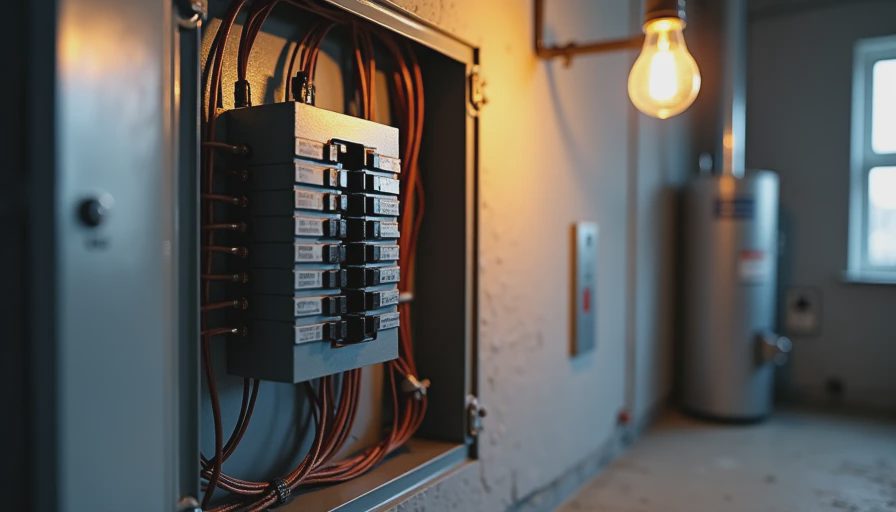
That meant opening the panel.
If you have never stood in front of a residential load center with the dead-front cover off, the experience is equal parts intimidating and oddly familiar to anyone who has spent years in a data center. The bus bars look like overgrown power distribution units. The breakers are just very large, very dumb ports. The difference is that in a server room you can take a rack offline. In a house, your family still needs lights, the fridge still needs to stay cold, and the heat pump still needs to run while you are trying to figure out which circuit feeds the dishwasher you just turned into a smart device.
I labeled half the breakers wrong on the first pass. I will write about that particular comedy of errors in a later Install post. The important part is what happened next: once the monitoring clamps were in place and the data started flowing into Home Assistant and then into Grafana—what my wife Taryn has permanently named “the nerd wall”—I could finally see the house the way I used to see a network. Traffic patterns. Peak loads. Unexpected consumers. The furnace fan that ran for forty minutes after the heat pump had already satisfied the call. The entertainment center that drew 180 watts at idle because someone left a game console in rest mode.
Data changed the conversation from “I think this is working” to “here is the spreadsheet.”
What Ripping Open the Panel Actually Means
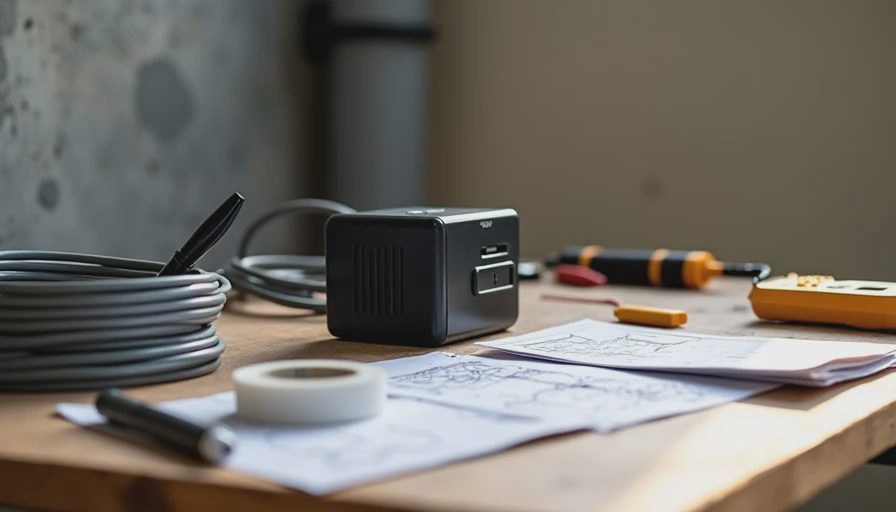
When I say I started ripping open the electrical panel, I do not mean I became a licensed electrician overnight or started swapping breakers for fun. I mean I treated the panel the same way I used to treat a core switch: document everything, change one variable at a time, and keep a rollback plan.
The practical steps looked like this:
First, a full photographic inventory of every breaker, every wire color, every spare knockout. Second, a temporary labeling system that survived the first two power cycles. Third, the careful addition of circuit-level monitors—Emporia Vue in my case—without creating new code violations or turning the panel into a rat’s nest. Fourth, the long, slightly humbling process of mapping those monitors to actual loads by turning things on and off while watching the live graphs.
Along the way I learned residential electrical code the hard way, earned my NABCEP PV Associate credential, and eventually started Chandler Home Performance so I could help other Boise homeowners avoid the same expensive detours. The blog is still the place where the experiments live in public. The consulting work pays for the next round of hardware. The two feed each other.
None of this requires you to become a full-time systems administrator for your house. It does require a willingness to treat the home as a system instead of a collection of appliances that happen to share a roof.
The Numbers That Kept Me Going
Eighteen months of heat-pump data later, the story is clearer. Winter bills dropped. Summer bills stayed roughly flat because the same machine that heats also cools, and Boise summers are not Houston summers. The real surprise was the shoulder seasons—those mild weeks in spring and fall when the old furnace would have short-cycled itself into inefficiency while the heat pump just hummed along at low speed.
Solar came later. An 8.4 kW system went on the roof in 2024. Year-one production matched the model within a few percent, which is the kind of result that makes a former network engineer very happy. Net metering with Idaho Power is straightforward if you understand the rate schedule. Time-of-use pricing added another layer of optimization once the circuit-level data showed me exactly when the big loads preferred to run.
None of these outcomes were guaranteed on day one. They were measured, adjusted, and measured again. That loop—observe, change, observe—is the same one I used to run on production networks. It works on houses too.
Why the Blog, and Why This Category First
The Control Panel is the first category for a reason. Before you can trust the energy numbers, you need a house that can report them. Before you can automate comfort, you need automations your family does not immediately disable. Before you can talk about ROI, you need a system that is still running six months later.
This category will cover the practical side of that work: Home Assistant configurations that survive family life, the eternal smart-bulb versus smart-switch debate settled by installing both in the same room, the automation that once turned off the furnace during a Super Bowl party (and how we fixed it), and the growing list of things I got wrong the first time.
I will not sell you an ecosystem. I will not tell you that every house needs twenty-seven Zigbee sensors. I will show you the Grafana dashboard, the utility bill PDF, and the drywall patch that still bothers me when the light hits it just right.
If you are the kind of homeowner who wants the data without the dogma, you are in the right place. If you are still deciding whether a heat pump or a smart panel or a simple circuit monitor is worth the Saturday, the upcoming posts in Energy Audit and The Install will give you the before-and-after numbers and the install scars to match.
The panel is open. The meters are clamping. The house is starting to talk.
Your house should work for you, not the other way around. Let’s keep it that way.


Letters
No letters yet — be the first to write.