If you are searching for solar panels for home solar panels cost, you probably want one useful number: what will this project actually take out of the checking account? The honest answer is usually somewhere between $15,000 and $35,000 before incentives for a typical American home, but the range gets wider quickly when you add a battery, electrical work, or a complicated roof.
I approach solar the same way I approach a network upgrade: measure the load first, then buy hardware. A large array on a poorly insulated house is like installing a gigabit internet connection for a house with one slow laptop. It works, but you paid for capacity you did not need.
Solar panels for home solar panels cost: the numbers behind a typical quote
A residential solar system commonly costs about $2.50 to $3.50 per watt before incentives, though local labor, roof access, equipment, and market conditions can move that figure. A 6-kilowatt system might therefore receive a gross quote of $15,000 to $21,000. An 8-kilowatt system could land around $20,000 to $28,000.
That price generally includes panels, inverters, racking, permits, design, labor, and utility interconnection. It does not always include a new main electrical panel, roof repairs, tree removal, trenching, or battery storage. Those extras are where a seemingly attractive quote can grow by $5,000 to $20,000.
The federal residential clean energy credit has historically allowed eligible homeowners to claim 30% of qualified solar and battery costs, subject to current federal rules and tax circumstances. A $24,000 qualifying project could represent an $7,200 tax credit, leaving an effective cost of $16,800. That is a tax credit, not an instant discount on the installer invoice, so you need enough federal tax liability to use it and should confirm current rules with a tax professional.
Roof design matters more than panel brand. A simple south-facing roof with little shade is cheaper to build than a steep roof broken into four planes. Microinverters from companies such as Enphase can help when panels face different directions or receive partial shade, while string inverter systems from brands such as SolarEdge can be cost-effective when the array is relatively uniform. I would rather have a well-designed midrange system than premium panels forced onto a bad roof.

What changes the solar panels for home solar panels cost estimate
The first variable is your annual electricity use. Pull twelve months of utility bills and add the kilowatt-hours, not just the dollar totals. A family using 9,000 kilowatt-hours per year needs a different array from a household using 16,000. Future loads matter too. A heat pump, induction range, electric water heater, or electric vehicle can add substantial consumption.
The second variable is your utility rate structure. Net metering can improve the economics of solar by crediting exported electricity, but the credit may not equal the retail rate. Some utilities also use time-of-use pricing, demand charges, or fixed monthly fees. A system that looks excellent under one rate plan can be mediocre under another. Ask for production and savings estimates based on your actual tariff, not a generic national average.
Batteries add control, not automatically better payback. A 10- to 15-kilowatt-hour battery may cost roughly $10,000 to $18,000 installed before incentives. It can store midday solar for evening use, provide backup for selected circuits, and reduce exposure to expensive peak rates. It will not usually power every large load indefinitely. My own priority would be refrigeration, internet, lighting, the gas furnace controls, and a few outlets before trying to run an electric dryer during a long outage.
Electrical upgrades deserve careful inspection. Older homes may need a service upgrade, while newer homes might only need a breaker rearrangement or a load calculation. Do not accept a vague line item labeled electrical allowance. Ask what equipment is included, whether trenching is priced, and who pays if the utility requires a transformer or service change.
How to compare quotes without getting fooled
When comparing solar panels for home solar panels cost proposals, put each quote into the same spreadsheet. Record system size in kilowatts, estimated annual production, panel and inverter models, battery capacity, total price, financing rate, cash price, warranty terms, and expected utility credits. Price per watt is useful, but it is not enough. A cheap system producing less because of shade is not a bargain.
Check the production estimate against the roof. If a contractor predicts 10,000 kilowatt-hours from a small, shaded array, ask for the assumptions. Request a layout showing azimuth, tilt, shading, and panel-level production. A reputable installer should be able to explain the estimate without hiding behind software screenshots.
Financing deserves special attention. A low monthly payment can conceal dealer fees, a long term, or a required lump-sum payment after the tax credit. Compare the cash price with the total of every loan payment. For example, a $25,000 cash project and a financed project with a $31,000 repayment total are not equivalent, even if the first-year payment looks comfortable.
I would also check licensing, insurance, workmanship coverage, equipment warranties, and who handles permitting. Panel warranties often cover product defects for decades, but workmanship coverage is a separate promise. The company installing the array matters more than a glossy brochure.
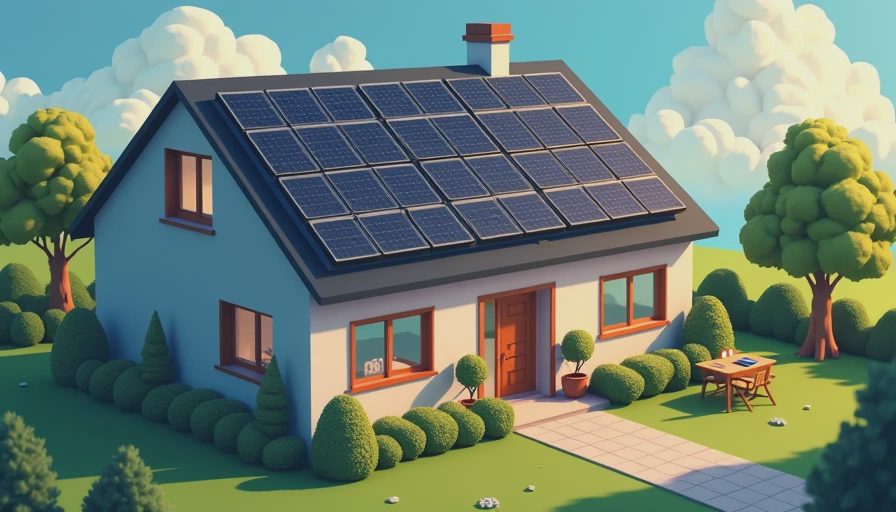
A practical payback example
Suppose a household buys an 8-kilowatt system for $24,000 and qualifies for a 30% federal credit. The effective post-credit cost is $16,800. If the system reduces the electric bill by $1,400 per year, simple payback is about twelve years. If rates rise, payback could improve; if export credits are poor or production falls short, it could take longer.
That calculation ignores financing interest, inverter replacement, roof work, and the value of backup power. It also ignores the possibility that efficiency improvements could reduce the required array. Spend $2,000 on air sealing and attic insulation first, and you might avoid buying an extra kilowatt or two of solar. Efficiency is often the least exciting part of the project and the easiest to justify.
For my Boise house, I would review winter consumption separately from summer consumption. Heating demand, short daylight hours, snow, and utility-rate details can make an annual average look better than the month-to-month reality. A Grafana dashboard is useful here because it shows whether the panels are offsetting actual loads or simply exporting energy when the credit is weak.
Is solar right for your house?
Solar is strongest when the roof is sound, the home has steady electricity use, and the utility offers reasonable treatment of exported power. It is less compelling when you need a new roof immediately, the array would be heavily shaded, or you plan to move before recovering the investment. A lease or power purchase agreement can reduce upfront cost, but read escalator clauses, transfer requirements, and removal terms before signing.
Before requesting bids, gather utility bills, inspect the roof, list future electric appliances, and identify your backup-power priorities. Then get at least three detailed proposals and ask each installer to explain the same assumptions. The best answer to solar panels for home solar panels cost is not the lowest advertised package. It is a system sized for your real loads, your roof, and your utility rules.
My rule is simple: fix waste, understand the tariff, then size the hardware. Your house should work for you, not the other way around.



Letters
No letters yet — be the first to write.