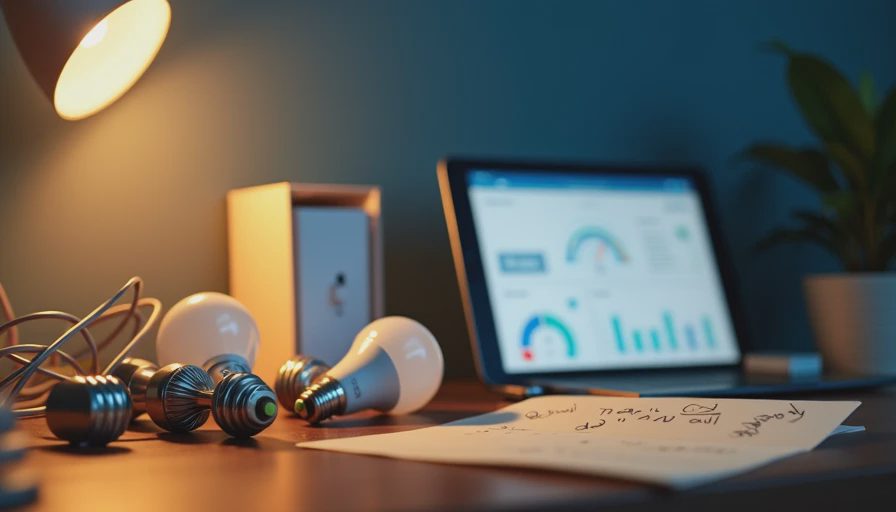
The Post Where I Admit the Dumb Things First
Every smart-home system that has been running for more than a year contains a quiet museum of bad decisions. Mine is no exception. Some of the mistakes were technical. Some were social. All of them taught me more than the successful automations ever did.
This is the roast. Five of the clearest own-goals I have made while turning a 2003 Boise house into something that mostly behaves. I am writing them down so you can skip at least a few of them.
Your house should work for you, not the other way around. That includes not making the people who live there want to unplug the hub.
Mistake 1: Automating Everything Before Understanding Anything
The early days were a classic engineer pattern. If a device could be brought online, it was brought online. If an automation could be written, it was written. Lights, climate, notifications, presence, media, even a reminder about the garage freezer door—everything received a rule.
The result was a house that felt busy. Lights turned on when no one wanted them. Notifications arrived for events nobody cared about. The family learned to ignore the system instead of trusting it. I eventually deleted more than half of the original automations and started over with a simple test: does this remove a real annoyance, and will anyone notice if it disappears? Only the ones that survived both questions stayed.
Lesson: start with presence, lighting, and one or two high-value alerts. Live with them. Add more only when the existing set feels invisible and helpful.
Mistake 2: Letting Smart Bulbs Fight the Wall Switch
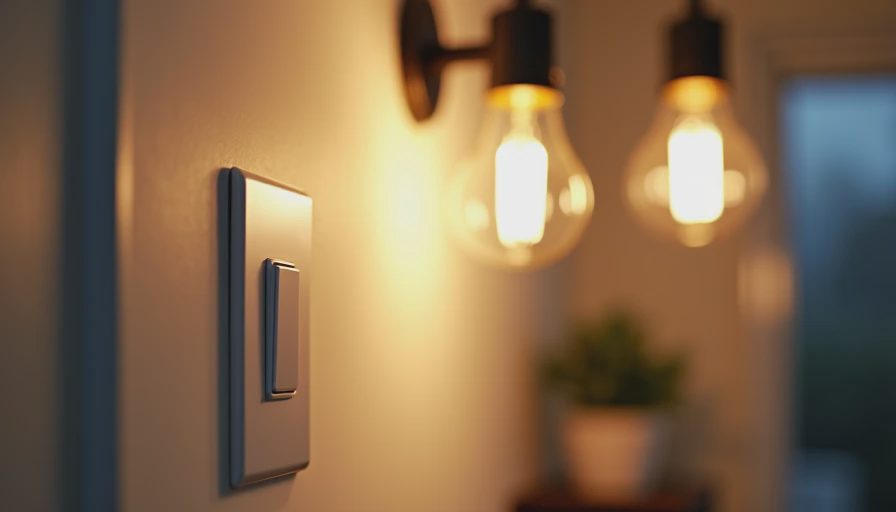
I installed smart bulbs in several rooms that still had ordinary switches. People did what people do: they turned the switch off. The bulbs went offline, the automations broke, and the next person to enter the room found darkness and confusion.
The fix was straightforward once I stopped defending the original choice. Primary rooms now use smart switches and ordinary bulbs. Smart bulbs live only in places where the power stays on—lamps, cabinets, accent fixtures. The wall switch became the final authority again, and the complaints stopped.
Lesson: if humans routinely touch the switch, put the intelligence in the switch, not in the bulb.
Mistake 3: Silent Climate Automations That Surprised People
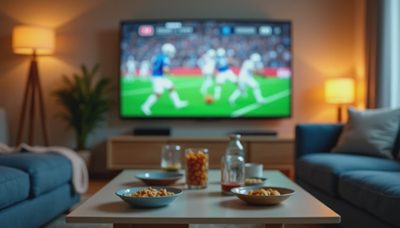
The Super Bowl incident was the most public version of this mistake, but it was not the only one. Any automation that changes temperature or turns equipment off without a clear, visible signal will eventually create a moment of “why is the house doing that?” Trust drops fast when comfort systems act without explanation.
I now require every climate-saving rule to have an obvious override and a notification when it takes action during occupied hours. Soft setbacks are preferred over hard shutoffs. High-occupancy conditions simply disable the aggressive rules.
Lesson: comfort automations need better manners than lighting automations. Make them visible and easy to reverse.
Mistake 4: Building Dashboards Only an Engineer Could Love
The first Home Assistant dashboards were dense, technical, and full of entity names that meant something only to me. The rest of the family avoided them. When something needed to be adjusted, I became the single point of failure.
I rebuilt the family-facing views with large touch targets, plain language, and almost no technical jargon. The detailed entity views and Grafana wall remain available for me. The kitchen tablet and the shared phones show only what a non-technical person needs.
Lesson: if the interface requires training, it will not be used. Design for the least interested person in the household.
Mistake 5: Treating Reliability as an Afterthought
Early on I ran critical automations on a setup that had no clean backup path and no monitoring for the host itself. When the machine had a bad day, the house lost lighting schedules, climate setbacks, and presence logic at the same time. Recovering was manual and annoying.
The current system lives on hardware that is backed up automatically, monitored for basic health, and capable of surviving a short outage without leaving the house in an undefined state. Critical functions degrade gracefully instead of disappearing.
Lesson: the smart home is only as good as its ability to keep working when something ordinary fails. Build the boring reliability pieces before the clever automations.
The Pattern Underneath the Mistakes
All five errors share a common root: I optimized for technical completeness before I optimized for daily life. The house does not need to demonstrate every capability the software offers. It needs to be predictable, reversible, and mostly invisible.
The current system is quieter. There are fewer automations, clearer interfaces, and better guardrails. The family notices the house more when something is missing than when something is working. That is the target.
I will make new mistakes. The difference is that the feedback loop is faster now, and the blast radius is smaller. The roast continues, just with fewer public incidents.
Your house should work for you, not the other way around. The fastest way to get there is to stop making it work against the people who live inside it.
Letters
No letters yet — be the first to write.