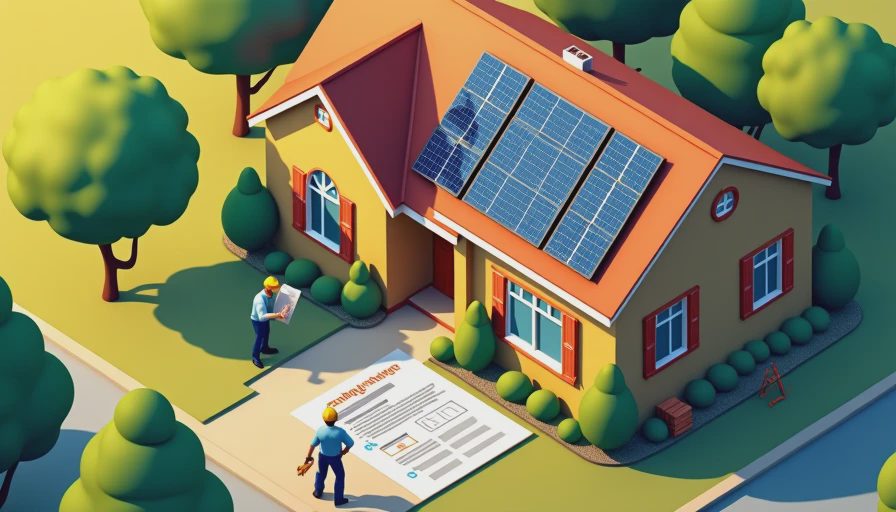
If you searched for the energy efficient home improvement credit 2026 because a heat pump, insulation project, or electrical upgrade is on your list, there is an important change to understand before signing a contract. The federal Energy Efficient Home Improvement Credit, commonly called Section 25C, was ended for improvements placed in service after December 31, 2025. That means a project completed in 2026 generally cannot use the former federal credit, even if the equipment is efficient and the house is your primary residence.
This is not a reason to abandon every retrofit. It is a reason to stop treating a tax credit as guaranteed project math. I have made that mistake myself. When I installed a heat pump water heater, I built a spreadsheet around the equipment price, electrical work, utility savings, and available incentives. The spreadsheet was useful because it still worked when one expected incentive changed. Your house should work for you, not the other way around, and your renovation budget should do the same.
What changed after 2025
The energy efficient home improvement credit 2026 question comes down to the placed-in-service date, not the date you received a quote. Under the former rules, eligible homeowners could claim credits for qualifying insulation, exterior doors, windows, heat pumps, heat pump water heaters, electrical panel improvements, and home energy audits. Annual limits depended on the category, with some high-efficiency equipment eligible for substantial dollar credits and a general annual cap for many other improvements.
Those rules applied to qualifying property placed in service during the allowed period. A deposit paid in December does not automatically make a project a 2025 project. If the contractor installs and commissions the heat pump in January 2026, the timing can matter. Keep the contract, invoices, product certification, permit records, and final installation date in one folder. Tax treatment can depend on details, so a qualified tax professional should confirm your filing position.
The practical result is simple: do not let an old 25C calculator persuade you that a 2026 project has a federal credit. Many articles and manufacturer pages still describe the earlier program because they were written before the law changed. Read the publication date, then verify current IRS guidance and the equipment manufacturer's documentation.
How to evaluate a project without the credit
Start with annual energy use, not the rebate headline. Pull twelve months of electric and gas bills. If you heat with natural gas, estimate how many therms are used for space heating and water heating. Then compare that baseline with the expected performance of the replacement equipment. A contractor who can provide Manual J load calculations, estimated seasonal efficiency, and commissioning details is more useful than one who simply promises a percentage reduction.
For example, a $14,000 cold-climate heat pump might require a $3,000 electrical upgrade and deliver better comfort, but the payback could look very different in Idaho, Minnesota, and Georgia. A $2,000 air-sealing project may be less exciting, yet it can reduce drafts and make an existing furnace or heat pump run less often. Insulation, duct sealing, and weatherization often deserve attention before adding a larger mechanical system.
I also separate savings from benefits. Lower energy use is one benefit. Even temperatures, quieter operation, better indoor air quality, and reduced gas use are separate benefits. Put dollar values only on the savings you can reasonably measure. My HouseOS dashboard tracks whole-home consumption, water-heater runtime, and HVAC cycles, but it cannot turn a comfort improvement into a fake payback number.
State, utility, and manufacturer incentives still matter
The loss of the federal energy efficient home improvement credit 2026 does not mean every incentive disappeared. Utilities, states, cities, and electric cooperatives run separate programs with different rules. Some offer instant discounts through participating contractors. Others require an application, income qualification, a home energy assessment, or preapproval before work starts.
Search your utility's official rebate page before selecting equipment. Look for the exact model number, not just the product family. A heat pump that appears efficient in a sales brochure might not qualify under the utility's list. Also check whether the program requires a licensed contractor, permit, electrical inspection, or post-installation test. Missing one form can turn a projected $1,500 rebate into zero.
The federal Home Energy Rebates programs are another category, but availability and administration vary by state. Do not treat a national announcement as money already available in your zip code. Ask whether applications are open, whether funds remain, and whether the program can be combined with a utility discount. Written confirmation beats a contractor's memory.
A better 2026 upgrade sequence
First, fix the building shell. Air-seal obvious leaks around attic penetrations, plumbing openings, recessed lights, and rim joists. Add insulation where the numbers justify it, and verify attic ventilation details before burying anything. These improvements usually have fewer failure modes than complicated equipment and make later upgrades smaller.
Second, measure the electrical system. A heat pump water heater, induction range, electric vehicle charger, and heat pump can compete for panel capacity. A smart load-management device may cost less than a panel replacement, but only an electrician can determine whether it is appropriate for your installation. Do not install a device just because its app looks polished.
Third, replace equipment at the end of its useful life unless the current system is unsafe or failing badly. A working furnace that has already been paid for can be cheaper to operate for another year while you compare bids. Get at least two proposals that show equipment model numbers, labor, permits, warranty terms, duct changes, and startup testing.
Fourth, add monitoring after the project. A circuit monitor, utility interval data, or even a monthly spreadsheet can show whether the promised improvement arrived. Record outdoor temperature, runtime, and energy use. Without a baseline, every claim is just a story.
What to do before filing taxes
If you completed an eligible improvement in 2025, gather your receipts and the manufacturer's certification now rather than assuming your tax software will fill in the gaps. The energy efficient home improvement credit 2026 is not a substitute for reviewing a prior-year project. Confirm the installation date, eligibility category, annual limit, and whether you had enough tax liability for the credit rules that applied to your return.
For a 2026 installation, keep the same records even when no federal credit is expected. Utility programs, state incentives, warranty claims, and future home-sale questions all benefit from a clean paper trail. Save the final invoice, permit closure, efficiency certificate, serial number, rebate approval, and photographs of hidden work.
The energy efficient home improvement credit 2026 headline is disappointing if you expected a federal discount, but it also exposes weak project planning. Choose upgrades because the measured energy and comfort results make sense, then treat incentives as upside rather than the foundation. Start with an audit, compare real bids, verify current program rules, and make the house easier to operate. That is how a retrofit survives changing legislation and still earns its place on the monthly bill.



Letters
No letters yet — be the first to write.