The Week the Sky Turned the Color of a Bad Filter
Every summer in the Treasure Valley brings at least a few stretches when the air quality index climbs into the “unhealthy” range and the foothills disappear behind a brown haze. Wildfire smoke is now part of the seasonal rhythm. The first time it settled in for more than a couple of days I did what most people do: closed the windows and ran the air conditioner on recirculate. The house stayed cool. The indoor particle counts still climbed. The power draw was obvious on the circuit monitors.
That experience forced a more deliberate approach. This post is the current playbook—what actually moves the needle on indoor air quality during smoke events, what simply wastes electricity, and how the rest of the house systems (heat pump, filtration, automation, and monitoring) fit together when the outdoor air is the problem.
Your house should work for you, not the other way around. That includes the days when the outside air is trying to work against you.
What Smoke Actually Does Inside a Typical House
Fine particles (PM2.5) find every leakage path the blower-door test already identified. Even a relatively tight house still exchanges air. Closing the windows slows the intrusion; it does not stop it. Running the air conditioner on recirculate cools the air and passes it through the system filter, but most standard furnace filters are not designed to capture the smallest smoke particles efficiently. The result is a slow, steady rise in indoor particle counts unless you add better filtration or active air cleaning.
Circuit-level data made the cost of the “just run the AC” strategy visible. Continuous cooling during a multi-day smoke event added a noticeable load at the exact time solar production was already reduced by the same hazy sky.
The Practical Stack That Works in This House
Better filtration on the existing air handler.
I upgraded to a higher-MERV filter that the heat-pump air handler can still move air through without excessive static pressure. It is not a HEPA system, but it is a clear step up from the builder-grade filter and it captures a meaningful fraction of the incoming smoke particles each time the system runs. Filter changes become more frequent during smoke season; that is simply the cost of using the system as a cleaner.
A portable HEPA unit for the main living space.
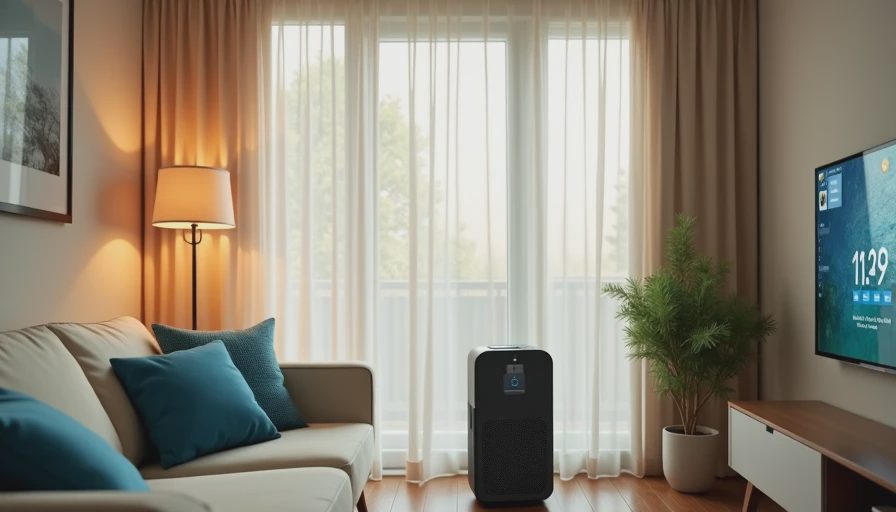
One properly sized true-HEPA purifier running in the living room and kitchen area keeps the highest-occupancy zone cleaner without requiring the central system to run continuously. It draws far less power than the heat pump and can be left on high during the worst outdoor hours.
Positive pressure when the outdoor air is better.
On days when the AQI drops for a few hours, I use a controlled window opening plus the quieter exhaust fans to give the house a short purge, then close up again and let the filtration take over. Timing this with the monitoring data prevents the “I opened the windows at the wrong time” problem.
Automation that watches outdoor air quality.
A simple outdoor AQI integration feeds Home Assistant. When the readings cross a threshold, the system closes any motorized dampers we have, disables ventilation schedules that bring in outdoor air, and can send a notification. It does not solve the particle problem by itself, but it prevents the house from actively pulling in worse air.
Accepting the limits.
No combination of residential filters and purifiers turns a normal house into a clean-room during a severe, multi-day smoke event. The goal is to keep indoor levels significantly better than outdoor levels and to avoid making the energy problem worse while doing it.
What I Stopped Doing
I stopped treating the air conditioner as the primary air-cleaning device. Continuous cooling to “keep the air moving through the filter” is an expensive way to get mediocre filtration. I stopped opening windows on a fixed schedule during smoke season. I stopped assuming that a single portable purifier in a hallway would clean the entire house.
How the Data Changed Behavior
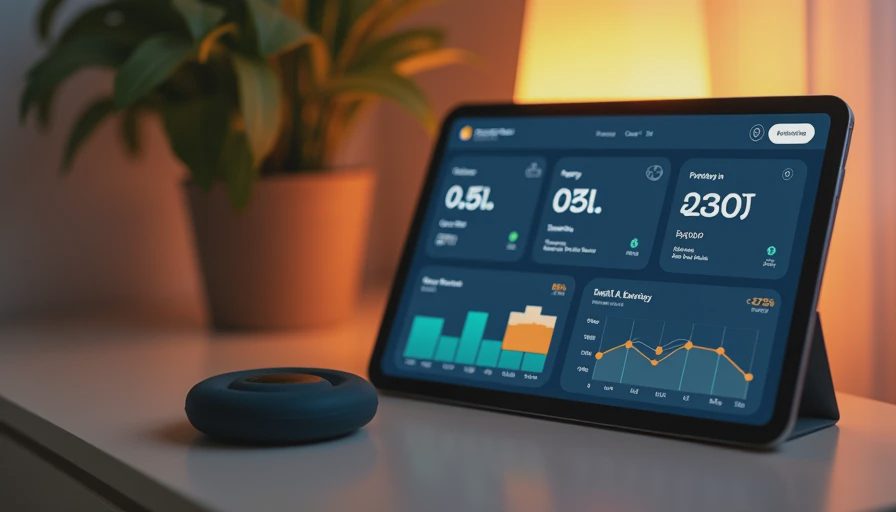
Indoor and outdoor particle sensors (even inexpensive ones) made the difference between guessing and knowing. When the indoor numbers start rising, we can see whether the current strategy is holding or whether it is time to step up filtration or reduce activity that stirs up particles. The same dashboards that track heat-pump power and solar production now carry a smoke-season view. That single pane of glass keeps the response proportional instead of panicked.
A Realistic Seasonal Playbook
Before smoke arrives: change the central filter, confirm the portable HEPA is clean, and test the automation triggers.
During moderate smoke: windows closed, central system on auto with the better filter, portable HEPA on in the main living area.
During severe multi-day events: add a second portable unit if needed, minimize cooking that produces particles, and accept that some indoor rise is inevitable.
When the air clears: short controlled ventilation, then back to normal.
The approach is not perfect. It is repeatable, relatively low-effort, and far cheaper than conditioning the entire house volume around the clock just to move air through a mediocre filter.
Your house should work for you, not the other way around. During smoke season that means giving it the tools to keep the indoor air cleaner than the outdoor air—without turning the utility bill into a second emergency.

Letters
No letters yet — be the first to write.