When I started testing smart home devices for energy efficiency in my 2003 Boise house, I expected the biggest savings to come from clever automations. Instead, the first win came from finding a refrigerator circuit that was running harder than it should. The dashboard did not make electricity cheaper; it showed me where the money was going.
That is the useful distinction. A connected gadget is not automatically an efficiency upgrade. The best tools measure waste, adjust equipment when nobody needs it, or prevent a system from running at the wrong time. A $25 smart plug can be more valuable than a $300 touchscreen if it reveals a space heater drawing power all night.
Start with measurement before buying controls
The most practical smart home devices for energy efficiency are often monitors. Whole-home monitors such as Sense, Emporia Vue, and Shelly EM use sensors around incoming electrical conductors to estimate circuit usage. A qualified electrician should handle work inside the electrical panel, but the resulting data can be viewed from a phone or a platform such as Home Assistant.
Expect roughly $100 to $300 for a whole-home monitor, before installation. Circuit-level monitoring costs more, but it answers better questions: Is the heat pump water heater using less energy than the old electric tank? How often does the sump pump run? Did the basement freezer suddenly become a 24-hour load?
I initially blamed our high summer usage on the air conditioner. The graph showed a different story: an older garage refrigerator and a dehumidifier were quietly consuming power every day. Removing the refrigerator saved more than several of my early automation experiments combined. Data is not glamorous, but it keeps you from spending $200 to solve the wrong problem.
Smart thermostats need a good control strategy
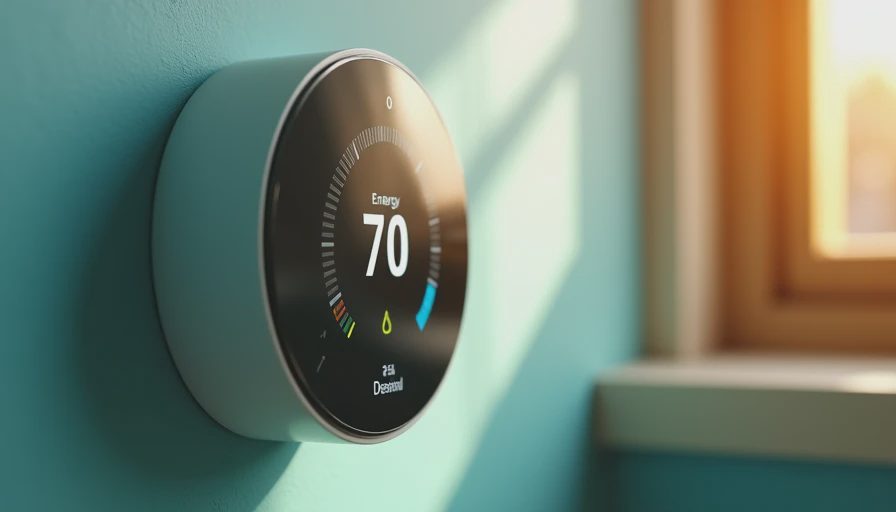
A smart thermostat is one of the most recognizable smart home devices for energy efficiency, with common options from ecobee, Google Nest, and Honeywell Home. The hardware is only half the project. Savings come from a reasonable schedule, accurate temperature sensing, and equipment that can respond safely to temperature changes.
For a conventional furnace or central air system, a thermostat can reduce heating or cooling while the house is empty and restore comfort before everyone returns. A typical device costs about $100 to $250. The payback depends on your schedule, weather, insulation, and existing thermostat habits. If you already turn the temperature down every night, automation will not create a miracle.
Heat pumps require more care. Large temperature setbacks can trigger expensive backup resistance heat or cause the system to run aggressively during recovery. In my house, a modest overnight adjustment works better than a dramatic one. I also added a remote sensor in the living room because the hallway thermostat was reading a warmer area near the kitchen. Comfort improved, and the system stopped chasing a misleading temperature.
Use smart plugs for specific loads
Smart plugs are inexpensive, but they are not suitable for every appliance. Use a properly rated plug for lamps, entertainment equipment, fans, and small electronics. Avoid placing a consumer smart plug on a space heater, refrigerator, air conditioner, or other high-load device unless the manufacturer explicitly supports that use. Motors and heating elements can create demanding electrical loads.
The best target is a predictable waste pattern. My office monitor, speakers, and printer used a small amount of power continuously. A $20 energy-monitoring plug now shuts them down after the house goes to sleep. That saved only a few dollars per month, but the automation also eliminated the daily annoyance of crawling under the desk.
For larger equipment, measure first and control second. A smart plug should not be used as a substitute for a dedicated circuit controller, a listed appliance control, or professional wiring. If a load is hardwired, ask an electrician about a suitable relay or energy-management device instead of improvising with an indoor plug.
Water heating is an overlooked opportunity
Among smart home devices for energy efficiency, water-heater controls deserve more attention. Electric resistance water heaters can be substantial loads, especially in a family that takes showers in the morning and runs a dishwasher at night. A heat pump water heater uses a different method: it moves heat into the tank instead of creating all heat directly with an electric element.
A connected heat pump water heater can provide scheduling, vacation settings, temperature alerts, and usage data. Brands including Rheem and A. O. Smith offer models with app-based features, although the best choice still depends on tank size, noise, installation space, and local service support. Purchase and installation can run from about $1,500 to more than $3,500 before incentives.
Do not schedule recovery so aggressively that the family runs out of hot water. I learned this during a weekend experiment when Finn's baseball team came back to the house and everyone showered within an hour. The energy graph looked excellent; the cold final shower did not. Efficiency has to survive contact with real life.

Automate around utility rates and solar production
Time-based automation can become one of the more useful smart home devices for energy efficiency when your utility uses time-of-use pricing or when you have solar panels. The basic idea is simple: run flexible loads when electricity is cheaper or when your solar array is producing more than the house needs.
That might mean charging an electric vehicle at night, running a heat pump water heater in the afternoon, or delaying a dishwasher cycle until solar output rises. Home Assistant, Emporia, and some manufacturer apps can coordinate these decisions. A smart electrical panel can provide more control, but panel upgrades often cost several thousand dollars, so the savings need to justify the project.
Do not assume every utility has the same rate structure. In Boise, I review Idaho Power's current schedules before building an automation, because a rule that makes sense under one tariff can increase costs under another. Also preserve manual controls. Taryn should be able to run the dishwasher immediately without opening my dashboard or asking HouseOS for permission.
Build a system that your household will keep using
The most effective smart home devices for energy efficiency are the ones that operate quietly and fail gracefully. Start with one measurable problem. Install a monitor, record a baseline for two to four weeks, make one change, and compare similar weather or usage periods. This is slower than buying six devices in one weekend, but the conclusions are much better.
A sensible sequence looks like this: measure whole-home consumption, identify a large controllable load, improve scheduling, then consider deeper electrical work. Seal air leaks and improve insulation before buying increasingly complicated heating controls. Software cannot compensate for a duct leak, a poorly insulated attic, or a thermostat installed beside a supply register.
Budget $50 to $150 for a few monitored plugs, $100 to $300 for whole-home measurement, and much more for circuit monitoring or a smart panel. Check utility rebates before ordering equipment; some programs require approved models, professional installation, or preapproval. Track comfort as well as kilowatt-hours, because a lower bill is not a win if bedrooms become unusable.
Your house should work for you, not the other way around. The right smart home devices for energy efficiency make that possible by turning invisible waste into visible decisions, then handling repetitive adjustments without making your family live inside an app.


Letters
No letters yet — be the first to write.