The Folder of Forms That Actually Saved Money
Rebate programs are the classic homeowner paradox. The money is real. The process is rarely fun. After three years of chasing every Idaho Power and local efficiency incentive that applied to our 2003 house, I have a clear personal list of what was worth the administrative pain and what quietly was not.
This is not a comprehensive directory of every current program—those change. It is a field report from one Boise household that treated rebates as part of the project budget rather than free money that appears by magic. The goal is to help you decide where to spend limited patience.
Your house should work for you, not the other way around. That includes the time you spend on paperwork.
How I Evaluate Any Rebate Now
I run every potential incentive through three simple filters before I print the first form:
Does the upgrade already make sense on its own numbers?
Is the rebate large enough, relative to the effort, to change the payback by a meaningful amount?
Can I complete the documentation with records I already keep (invoices, model numbers, before/after photos, contractor licenses)?
If the answer to the first question is no, I skip it. A rebate should never be the reason I buy something I do not otherwise want. If the answer to the second is “it saves me $40 and takes three evenings,” I also skip it. My time has a value, and so does yours.
The Rebates That Clearly Paid Off
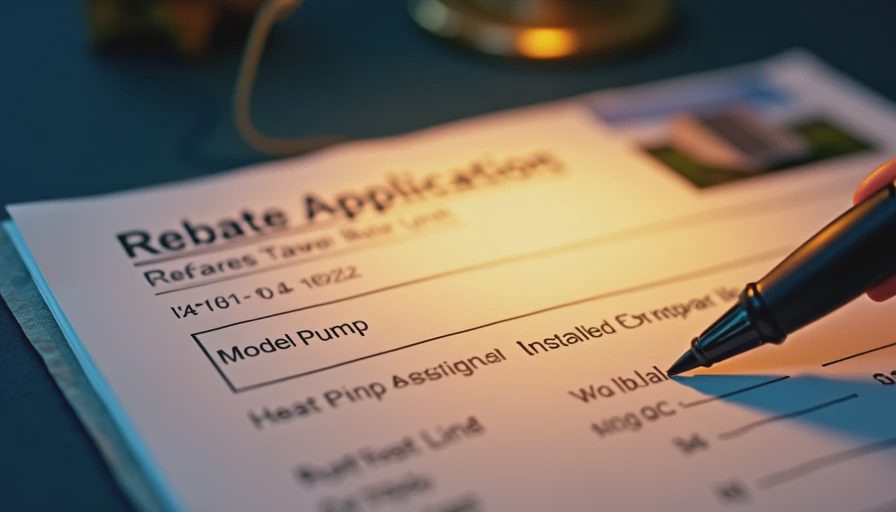
Heat-pump water heater incentive. The unit already made sense after the baseline energy audit. The Idaho Power rebate (and any stacked local or federal incentives available at the time) shortened an already acceptable payback and made the decision automatic. Documentation was straightforward: invoice, model number, and a quick post-install photo.
Heat-pump space heating and cooling. Same pattern. The equipment was justified by the Manual J and the utility-bill projections. The rebate improved the economics and reduced the “are we sure?” conversations at the dinner table. Because I already had circuit-level data and the original audit, proving the old system baseline was easy.
Attic insulation and air-sealing measures. These were less glamorous but highly cost-effective once the blower-door results were in hand. The incentives available for envelope work reduced the out-of-pocket cost enough that I accelerated the timeline. The paperwork wanted before-and-after details; the audit and the second blower-door test supplied them cleanly.
In each of these cases the upgrade was already on the roadmap. The rebate simply made the cash-flow timing better and removed a bit of risk.
The Ones That Were Not Worth the Friction
A small rebate for smart thermostats. The dollar amount was modest, the required documentation was fussy, and I already had a working Home Assistant climate control setup I preferred. I left it on the table.
Certain lighting or advanced power-strip incentives. The individual amounts were tiny. Collecting SKUs, receipts, and installation photos for a handful of bulbs or strips would have cost more in time than the check was worth. I bought efficient equipment where it made sense and skipped the form.
One early appliance rebate that required a pre-approval step I missed. By the time I discovered the requirement the purchase window had closed. Lesson learned: read the eligibility timeline before the truck shows up.
The pattern is consistent. Small dollar amounts plus fussy process equals low priority. Large dollar amounts attached to projects I was already doing equal high priority.
Practical Tips From the Trenches
Keep a single project folder—digital and paper—from day one. Invoice, model and serial numbers, contractor invoice with license number, before-and-after photos, and any required test results (blower door, Manual J, etc.) live together. When the rebate form asks for them you are not hunting through email.
Submit as soon as the project is complete and the final invoice is paid. Programs run out of funds. Waiting six months is an excellent way to turn an approved incentive into a regret.
Stack carefully. Some utility rebates can sit alongside federal tax credits; others cannot. The instructions usually say so in plain language once you read past the marketing.
Do not let the rebate tail wag the project dog. If the equipment or the scope has to be changed into something less suitable just to chase an incentive, the long-term cost usually exceeds the short-term check.
Finally, treat the time spent as part of the project cost. If a rebate requires ten hours of form-filling and follow-up for two hundred dollars, your effective hourly rate is low. Sometimes the rational choice is to walk away.
The Current Scorecard for Our House
The heat-pump and envelope incentives made a measurable difference in net project cost and payback timing. The small peripheral rebates did not. I still check the Idaho Power residential efficiency pages and the local city or county programs a couple of times a year, but I no longer feel obligated to chase every line item.
The paperwork folder is thinner now. The house is tighter, more efficient, and quieter. The rebates that mattered accelerated good decisions; the ones that did not matter were left alone.
If you are staring at a list of Boise or Idaho Power incentives, start with the projects you already know you need. Apply the three filters. File the forms that survive. Ignore the rest without guilt.
Your house should work for you, not the other way around. The same rule applies to the time you spend proving it to the utility.


Letters
No letters yet — be the first to write.