
Looking Past the First Wave
The house that began as a leaky 2003 builder-grade box now has a cold-climate heat pump, an 8.4 kW solar array, circuit-level and panel-level monitoring, a tightened envelope, a heat-pump water heater, load-shifting automations, and a family that has learned to live with the data without resenting it. The first wave of work is largely complete. The question that remains is what comes next—both for the physical house and for the public notebook that has documented it.
This post is the three-year roadmap as it stands today. It is not a promise of perfection. It is a prioritized list of the problems that still matter, the experiments that still look worthwhile, and the constraints that will keep the projects honest.
Your house should work for you, not the other way around. The next three years are about making that statement truer without turning the house into a permanent construction site.
What Is Already Decided
Several items have clear momentum and will move forward on ordinary maintenance and improvement cycles:
Continued envelope work. The blower-door number is better, not finished. Additional air sealing and selective insulation upgrades will continue as time and access allow. Each pass will be measured.
Filter and maintenance discipline. Heat-pump, water-heater, and ventilation filters now have runtime-based reminders. That system will stay.
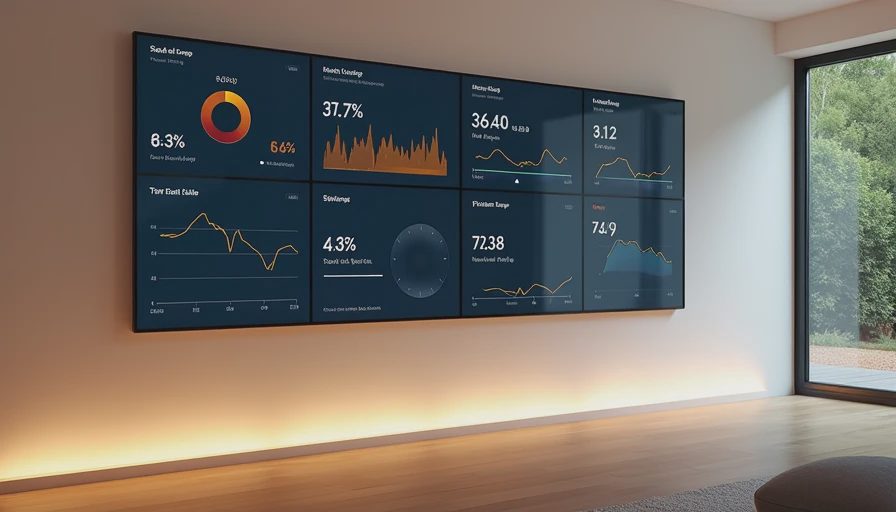
Data continuity. The monitoring stack—circuit, panel, production, climate, and indoor air—will remain the source of truth. New equipment must speak to it or justify why it cannot.
Load-shifting and time-of-use alignment. The automations that already move flexible loads will be refined, not abandoned. As rate structures evolve, the house will adapt.
These are no longer projects. They are operations.
The Open Questions for the Next Three Years
Electrification of the remaining gas loads.
The house still has a gas range and a gas fireplace. Both are candidates for eventual replacement. The range is the higher priority for indoor air quality and circuit capacity reasons; the fireplace is comfort and aesthetics. Timing will depend on equipment maturity, panel capacity after the smart-panel upgrade, and whether the measured payback or the comfort case is stronger.
Battery storage.
Solar production already exceeds daytime loads for large parts of the year. A right-sized battery could shift more of that energy into the evening peak window and provide modest resilience. The economics are still moving. I will revisit the numbers annually rather than force a purchase on principle.
Ventilation strategy.
As the envelope tightens further, deliberate ventilation becomes more important. An energy-recovery ventilator is on the evaluation list. Any system must integrate cleanly with the existing monitoring and must not become a new high-hour load that undoes earlier efficiency gains.
EV readiness.
An eventual electric vehicle will require a dedicated circuit and load management so it does not collide with the heat pump and other large loads during peak windows. The panel work already completed makes this straightforward; the exact timing depends on the vehicle decision, not the other way around.
Comfort outliers.
A few rooms still have minor temperature or airflow quirks. Targeted balancing, additional zoning logic, or small duct revisions may appear on the list once the larger systems have more years of data behind them.
What the Blog Will Do With the Same Horizon
Grid to Living will continue to follow the same rules that shaped the first twenty posts:
Real numbers over marketing claims.
Install scars and mistakes given equal space with successes.
Local Boise and Idaho Power context when it changes the math.
No brand-ecosystem warfare and no fear-based framing.
The publishing cadence will remain steady across the four categories. Some posts will be pure data updates—annual solar production, seasonal heat-pump performance, another utility-bill review. Others will document the next physical projects as they happen. A few will step back and synthesize what the cumulative data is teaching.
The persona stays the same: a former network engineer who treats the house like a system, lives with the results, and writes so that other homeowners can borrow the useful parts and skip the expensive lessons.
The Constraints That Keep the Roadmap Honest
Every future project still has to clear the original filters. It must solve a measured problem. It must survive contact with a working family. It must produce data that can be compared against the baseline. And it must leave the house more useful rather than more fragile.
Budget, time, and tolerance for disruption remain finite. The three-year list is therefore ordered by leverage, not by novelty. The glamorous items will wait their turn behind the ones that quietly stop ongoing waste or remove daily friction.
The Through-Line
Three years ago the house was a black box with a gas furnace and a stack of ordinary utility bills. Today it reports its own behavior, generates a meaningful fraction of its energy, heats and cools with far less waste, and does most of this without constant attention. The next three years are about finishing the edges, closing the remaining gaps, and letting the data keep refining the decisions.
I do not expect the house to become perfect. I expect it to become more predictable, more efficient, and more transparent about the places where it still falls short. That is enough.
Your house should work for you, not the other way around. The roadmap is simply the next set of steps to make sure it keeps doing so.

Letters
No letters yet — be the first to write.